
Written by: Surya Bhandari, James McLoughlin, Carina Yi
Published: 23/11/2026
Somewhere behind your latest ChatGPT prompt, expensive hardware is working hard. Firmus wants a bigger piece of that business, and its IPO would have let investors buy into Australia’s AI boom. Instead, the largest ASX float since Telstra fell apart in a single week.
What is Firmus?
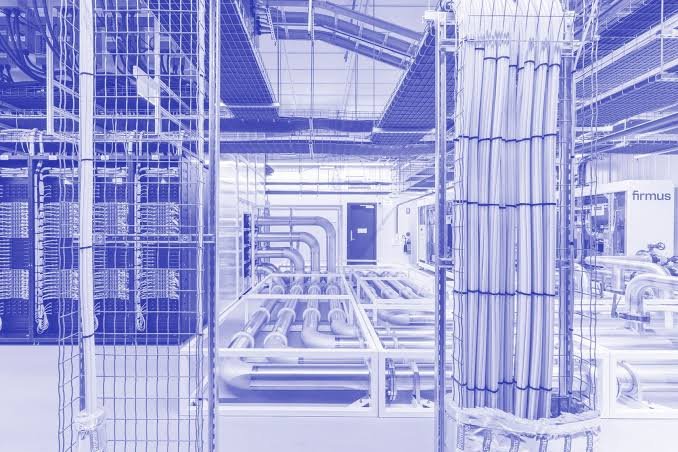
Before becoming an AI infrastructure giant, Firmus operated as a Bitcoin miner. It now builds efficient, liquid-cooled “AI factories”, packed with Nvidia chips and rented to tech giants like Meta and OpenAI. Backed by Nvidia, Blackstone and Jane Street (AFR, 2026), it is pushing Australia's AI infrastructure toward high density and energy resilience.
The significance lies in its scale. As of September, Firmus reported more than 900 megawatts of contracted capacity across seven AI factories, two operational and five under construction, plus a multi-year deal to supply OpenAI from two Malaysian facilities.
Firmus dearly needed funding, hence the IPO: a $7 billion raise on the ASX at $11 a share, with a valuation of roughly $44 billion. What could go wrong?
What Went Wrong: Two Structural Reasons, and Some Bad Timing
Most intuitively, the float was stupendously overvalued. Following the trend of the broader AI industry, the $44 billion valuation was built on promises. The promise of growing 46MW of operating capacity to 912MW, the promise of revenue from Meta and OpenAI contracts not expected until 2028, and of course an Nvidia halo. Meanwhile, the red flags flew high. Founders with no track experience in the technology sector, and plans to fund up to 90% of equipment with debt. Prospective investors weren’t swayed by the promises of tomorrow.
Secondly, the register was full of potential sellers. Firmus’ valuation had multiplied roughly twentyfold in a year, from $2 billion in September 2025 to $44 billion at the IPO price (AFR, 2026). Early backers were already sitting on enormous gains, with Regal Partners, for instance, multiplying its initial $10 million investment thirty-fold. With escrow restrictions only covering 42.4% of shares, and considering the firm’s assumption-heavy future, there was every incentive for early backers to lock in their profits after the float. Not great for investor morale.
Finally, the arguable catalyst occurred on October 5, the day before the bookbuild opened. Reports emerged that Firmus had missed a rental payment to CDC Data Centres, a key partner and one of Australia’s most established data centre firms. The same evening, CDC chief executive Greg Boorer confirmed that the partnership was effectively over. Later reporting attributed this to two key issues: disagreements on expansion strategy, and an earlier water spill at a CDC facility involving Firmus’ cooling technology, raising concerns about leak risks at data centres. The timing couldn’t have been worse, and concerns from offshore investors flooded in.
Within hours of the offer opening, brokers typically send out a message confirming that the books are covered, and invite firm bids. In this case, the messages never arrived. The required demand wasn’t there, and then whatever demand remained was withdrawn too. After Firmus refused to reprice, the float was withdrawn on October 9.
What Does This Mean?
For Firmus, this fallout is only beginning. Under agreements signed in July, Nvidia and Blackstone could force a share buyback if no IPO eventuates within five years, while some backers may be owed free shares if return targets are missed (AFR, 2026). This would create dilution threats at Firmus’ most capital-intensive stage. A Nasdaq listing is the expected step forward, with US investors better understanding AI and data centres. The question is whether Firmus can win back the investors who have already walked away once.
For the financiers, the damage is less apparent, but no less real. Local funds like Tectonic and Ellerston have chosen to keep valuing their stakes at August’s US $10.5 billion round (AFR, 2026), roughly a third of the IPO valuation. The banks weren’t spared either. The IPO carried an estimated $272 million in offer costs, much of it flowing to bankers. With its failure, they stand to only receive a fraction of the fees. The early Christmas that the investment banks were expecting never quite materialised.
For the ASX, the loss is twofold. Firstly, the collapse reverberated across firms exposed to Firmus. None more so than Maas Group, which paid $410 million for a 3.2% stake, and holds about $1.1 billion in Firmus work orders through its subsidiary JLE. Maas shares plummeted 22.4% as the bookbuild closed, and a further 5.6% the next day. Secondly, the ASX forfeited the largest float since Telstra, likely to the Nasdaq. Firmus was a test of local AI appetite, and this collapse may push the next wave of tech listings overseas.
No Firm Path Forward
Firmus’ collapse wasn’t necessarily a verdict on AI. It was just a really bad deal. An over-inflated valuation, a register full of eager sellers, and a badly timed scandal turned Australia’s most anticipated float into its most expensive failure. Firmus will be back for more; it just has to prove its worth, because blind faith could only take it so far.
